

Overview
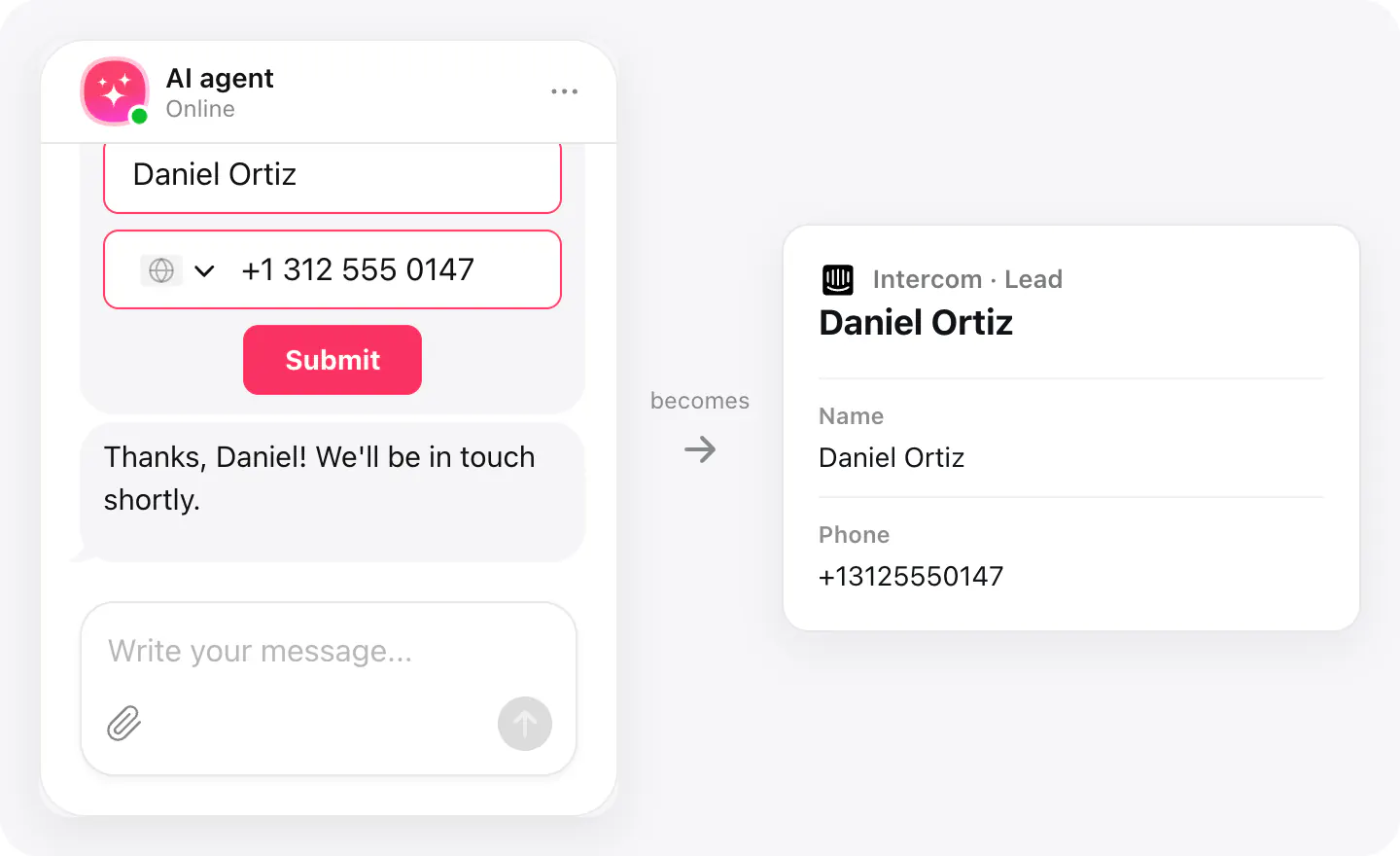
Your team already answers customers in Intercom. With it connected, a visitor who sends their name, email or phone in the chat becomes an Intercom lead the moment they do, so nobody has to copy contacts out of a chat log.
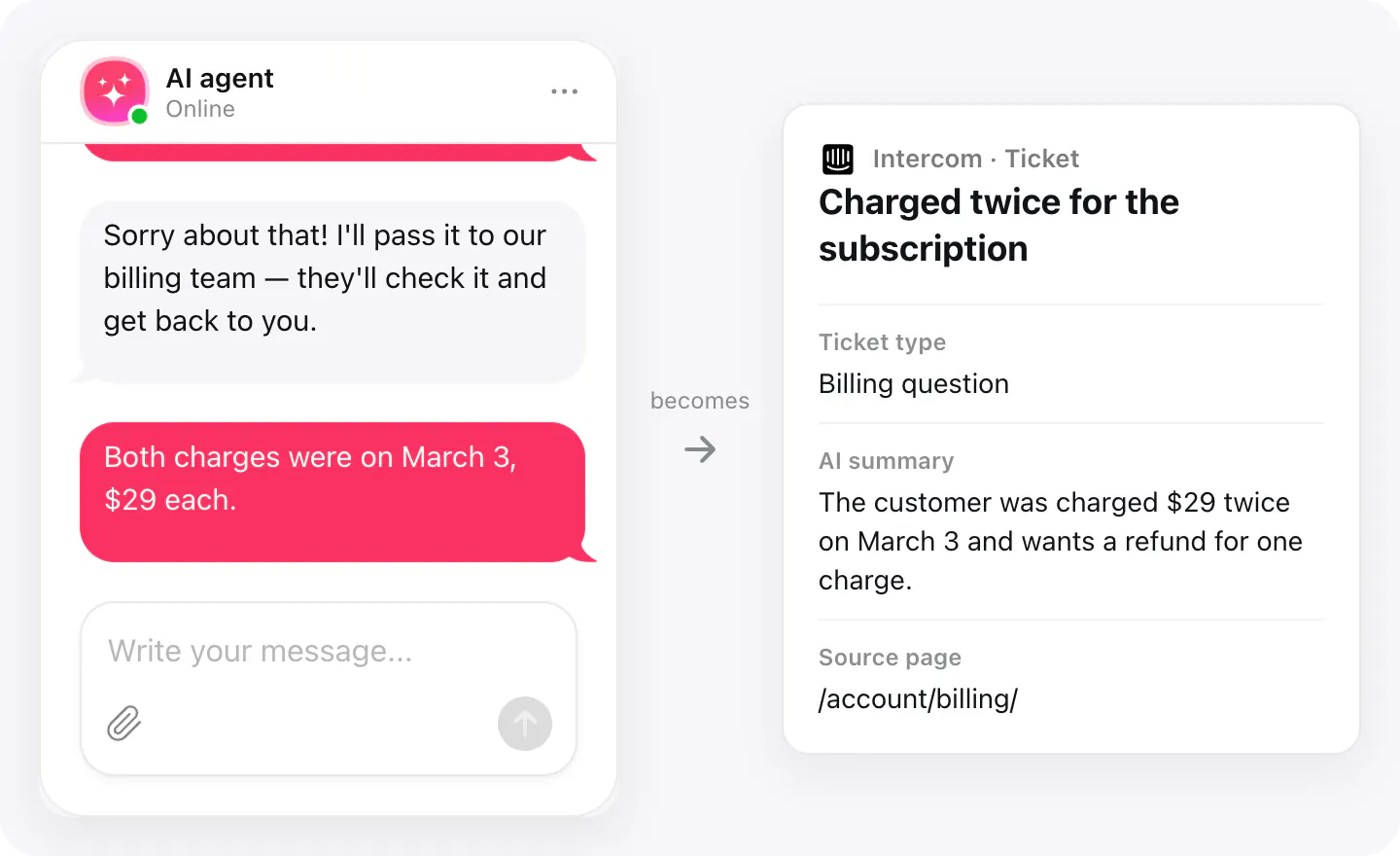
When the AI agent can't settle a question, the visitor's request becomes an Intercom ticket of the type you pick, linked to their contact: what they asked, an AI summary, the page they were on and, if you turn it on, the transcript. Your agents pick up with the whole story.
What you can do
These are the jobs the integration is built for.
Collect leads
When a visitor sends their details in the chat's contact form, they appear in Intercom as a lead right away — name, email and phone.
Create tickets of your type
A request for your team becomes a ticket of the customer ticket type you chose in the skill, titled with the chat topic and linked to the visitor's contact.
A conversation when tickets are off
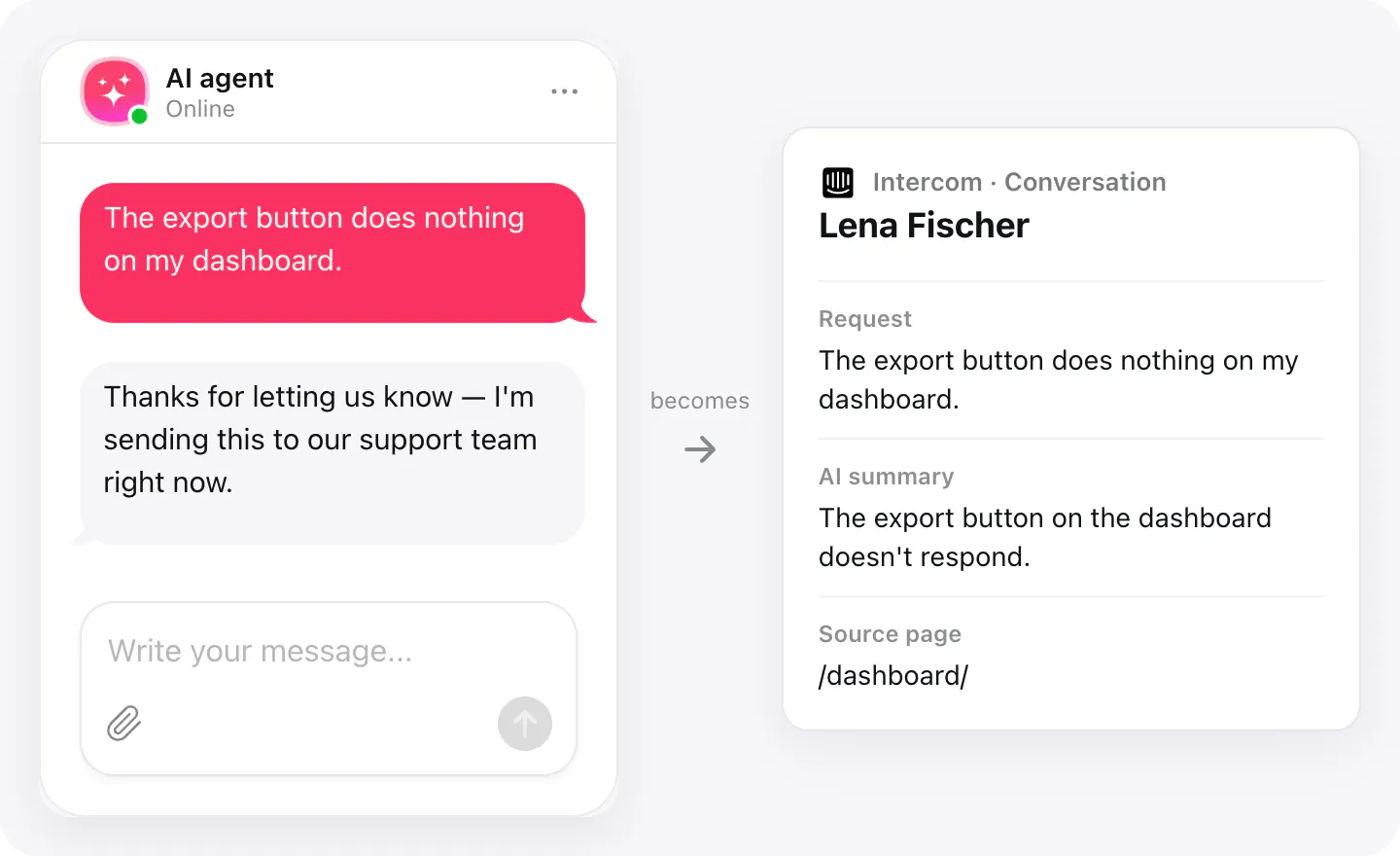
If your workspace has no customer ticket types, the request still reaches you: it arrives in the Inbox as a conversation from the visitor's contact, with the same details.
Set up
Connect Intercom in your widget's Integrations, then choose it in the skills that should use it: Collect contacts and Create ticket.
- Open your AI Chatbot widget, go to Integrations, choose Intercom and sign in to connect your workspace.
- In Agent skills, turn on Collect contacts and pick Intercom as where contacts go.
- Turn on Create ticket, pick Intercom, then the ticket type for new tickets — and whether to attach the conversation.
Connected apps and their status are listed in Integrations in your widget, where you can disconnect access at any time.
Requirements
- An AI Chatbot widget published on your site.
- An Intercom workspace you can sign in to and connect.
- For tickets: at least one customer ticket type in Intercom (without one, requests arrive as conversations).
What gets sent
What the integration passes on.
| What gets sent | Lead | Ticket |
|---|---|---|
| Name | ||
| Phone (in international format) | ||
| The visitor's request, in their words | ||
| Chat topic (the ticket's title) | ||
| AI summary of the conversation | ||
| The page the chat started on | ||
| A link to the chat in your dashboard (not with White Label) | ||
| The full transcript, when you turn it on |
If nothing arrives
- Check the skills. Collect contacts and Create ticket each need Intercom picked in the skill itself.
- A conversation instead of a ticket. Tickets need a customer ticket type in Intercom that isn't archived. Without one, the request comes in as an Inbox conversation; if the type you picked was removed, the first available one is used.
- A contact without a phone. Intercom accepts phone numbers in international format, with a plus and the country code. A number it rejects is left out, and the contact is saved without it.
How businesses use it
The same connection, set up for different kinds of business.
- SaaS & softwareTrial and pricing questions become leads for sales; bug reports and billing issues become tickets for support.
- Online storesOrder and delivery problems reach your support team as tickets, with the summary and the page the customer was on.
- Local & small businessOne Inbox for everything: leads from the chat and requests your team should answer in person.
- Gyms & fitnessMembership questions turn into leads your front desk follows up, and account issues into tickets.