
You probably check your Google reviews regularly. You know your star rating, you’ve replied to some reviews, and you have a sense of what customers are saying about your business. But the Google Business Profile dashboard has major blind spots that usually only become obvious when something goes wrong – a review changes, a rating drops unexpectedly, or a positive review disappears.
This guide covers what the GBP reviews dashboard actually reveals and what it hides, how the star rating is calculated, why reviews go missing, whether you can turn off reviews, and how to display your Google business reviews on your website with full control over presentation.
- What data the GBP dashboard shows per review — and five things it doesn’t
- How the star rating is really calculated (and why the “recency weighting” claim is a myth)
- How to search, filter, and export your Google reviews
- 8 documented reasons reviews disappear — and what to do about each
- How to embed Google reviews on your website and accelerate feedback
What Your Google Reviews Dashboard Actually Shows
You can access the GBP reviews dashboard at business.google.com by selecting “Read reviews” from your profile, reach it via Google Maps (click “Manage your Business Profile”), or directly in Google Search when logged in to your business account. The interface is straightforward, but what it doesn’t include matters more than what it does.
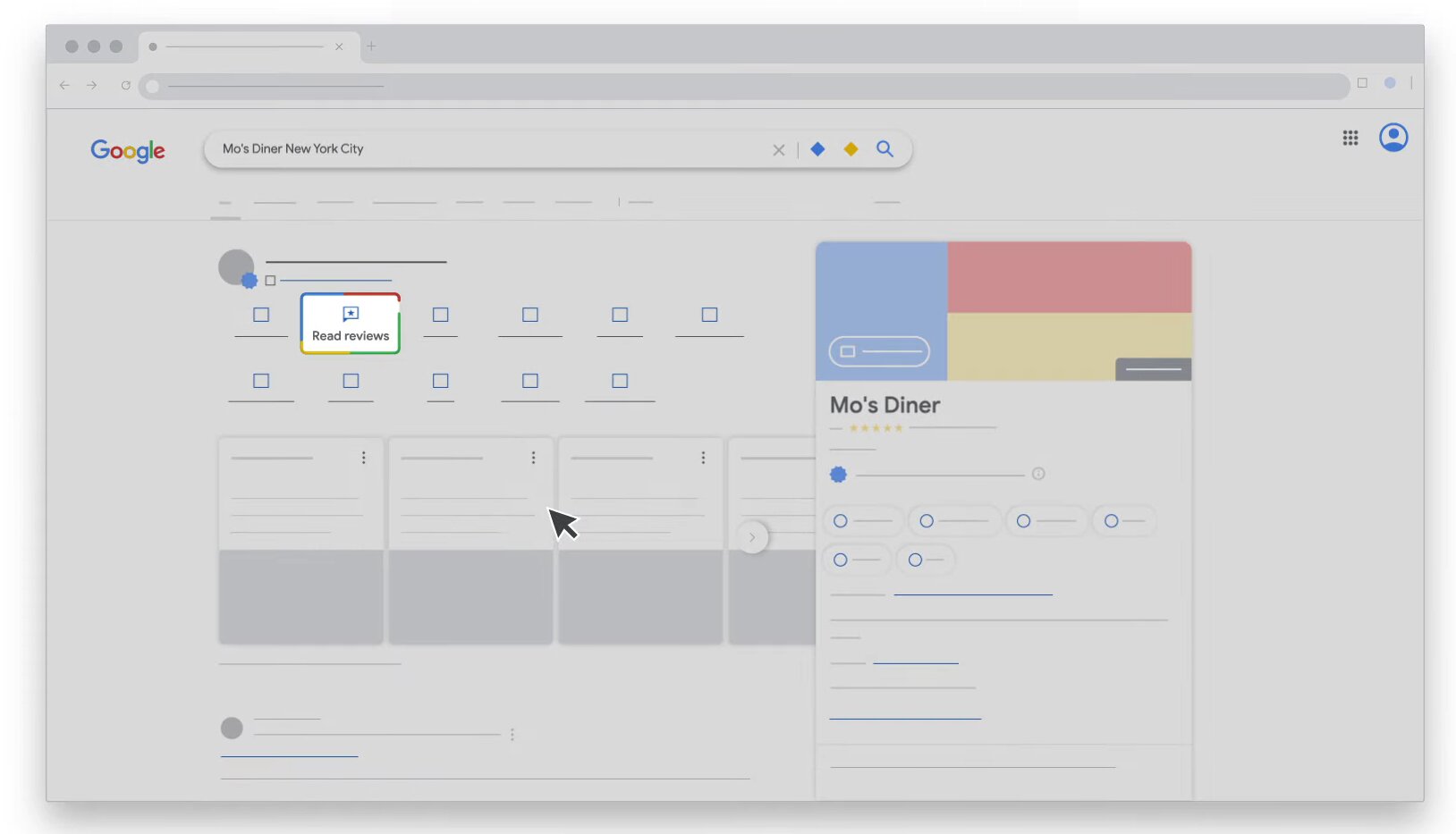
What you can see
Each review shows the reviewer’s name, star rating, review text, photos, review date, and your reply if you’ve responded. Some service businesses also see the specific service the customer selected.
You can sort reviews by relevance, recency, or rating, and filter by star score or response status. The unreplied filter is especially useful because it surfaces reviews that still need attention.
There’s also a keyword search feature that lets you search review text for specific terms. Google additionally generates clickable keyword tags based on commonly mentioned topics like “parking,” “customer service,” or “wait time” – a useful but underused feature.
What the dashboard doesn’t show
The dashboard’s blind spots are where business owners get tripped up. These aren’t bugs or missing features that Google plans to add — they’re fundamental gaps in what the interface was designed to surface.
| Dashboard blind spot | What actually happens | Why it matters |
|---|---|---|
| Edit history | When a customer edits their review, the date updates and an “Edited” label appears on the public side. You see only the current version — no original text, no diff view. | A 5-star review can turn into a 1-star review without any alert. Your reply may no longer make sense in context. |
| Filtered/removed reviews | Reviews removed by Google’s spam system simply disappear. There is no “removed reviews” section. | You can’t see what Google’s automated systems filtered out or verify whether a missing review was spam or legitimate. |
| Edit notifications | Google does not notify you when a customer edits an existing review. It updates silently. | You may not realize a review changed until you re-read it — or until a customer mentions your reply doesn’t match what they wrote. |
| Deletion notifications | You receive a notification if a review you flagged gets removed. You do not get notified when a customer deletes their own review. | Positive reviews can vanish without any alert, making your review count drop with no explanation in the dashboard. |
| Historical trends | The dashboard shows your current total review count and current average rating. No historical chart, no trend view, no month-over-month tracking. | You can’t measure whether your review volume or average rating is improving over time without tracking it manually or using a third-party tool. |
The notification situation is nuanced. Some practitioners report receiving notifications when Google automatically removes reviews (not just flagged ones), provided that email notifications are enabled.
Exporting your reviews
There is no “Download All Reviews” button in the GBP dashboard. The most accessible path is Google Takeout (takeout.google.com), which exports your review data as a JSON file you can convert to CSV.
One common mistake: make sure you select “Google Business Profile” in Takeout, not “Maps (your places)” — the latter exports reviews you personally wrote on other businesses, not reviews customers left on your listing.
For a full walkthrough of export methods, including the GBP API option for developer-grade access, see our guide to exporting Google reviews.
How Google Calculates Your Star Rating
The star rating displayed on your Google Business Profile is simpler than most articles make it out to be. Google’s help documentation is explicit about the formula:
“The review score is the average of all ratings published on Google for that place or business.” — Google Business Profile Help
That’s a flat arithmetic mean. Every review counts equally, regardless of when it was posted, the length of the review text, or the reviewer’s Google account activity. A 1-star review from three years ago carries the same weight in the score as a 5-star review from yesterday.
Rating refresh cycle
The rating does not update in real time. Google states that after a new review is posted, it may take up to two weeks for the displayed score to recalculate. The same delay applies when a review is removed — if Google takes down a spam review, your average will eventually adjust, but not immediately. This delay is a common source of confusion for business owners who see a new positive review but no change in their displayed rating.
Knowing this matters practically. If your average is 4.2 and you want it to reach 4.5, you can calculate exactly how many 5-star reviews you need. It’s arithmetic, not a black box.
How to Search and Filter Google Reviews
The native tools have limits: there’s no way to search by reviewer name (the workaround is browser Ctrl+F), you can’t combine keyword search with date or star-rating filters, and keyword search on Google Maps only covers reviews currently loaded on the page.
The Google Business Profile dashboard offers:
- Four sort options (Most Relevant, Newest, Highest Rating, Lowest Rating)
- Filters by star rating and response status (replied vs. unreplied)
- Keyword search via the magnifying glass icon
The unreplied filter combined with “Lowest Rating” sort is the fastest way to surface negative reviews that still need a response. The public-facing Google Maps view offers the same sort options plus keyword search with highlighted matches and auto-generated keyword filter tags based on commonly mentioned terms. For a detailed walkthrough of search methods, including how to search Google reviews by name and keyword, see our Google reviews search guide.
How to Manage Google Reviews
Managing Google reviews means understanding the boundary between what the platform lets you do and what it doesn’t. That boundary is narrower than most business owners expect.
What you can do
You can reply to any review directly from the GBP dashboard. Replies are reviewed by Google and typically appear within about 10 minutes, though Google notes the process can take up to 30 days in some cases. Your reply appears under your business name (your personal name stays hidden), and the reviewer receives a notification that you’ve responded.
You can also flag reviews for policy violations using Google’s Reviews Management Tool, which lets you report reviews and track the status of previous reports. This works best for clear-cut violations, such as spam, fake reviews from bot profiles, hate speech, or reviews that contain links. For borderline cases — a negative review you believe is unfair but doesn’t technically violate a policy — the success rate is low. Google will generally not remove a review just because a business disagrees with the characterization.
What you can’t do
- Edit or delete a customer’s review
- See who flagged your business or whether a specific review was reported by someone else
- Force Google to remove a review that’s negative but factually accurate
- Disable reviews on your listing (more on that in the next section)
| Action | Possible? | Notes |
|---|---|---|
| Reply to a review | Yes | Reviewed by Google; typically live within ~10 minutes |
| Edit your own reply | Yes | You can update or delete your reply at any time |
| Flag a review for removal | Yes | Success depends on whether the review violates Google’s policies |
| Track flag/appeal status | Yes | Via the Reviews Management Tool |
| Edit a customer’s review | No | Only the reviewer can edit their own review |
| Delete a customer’s review | No | Only Google or the reviewer can remove it |
| See who flagged your business | No | Flag sources are anonymous |
| Disable or turn off reviews | No | Not available for standard business categories |
Google Reviews Not Showing Up: Why and What to Do
Missing reviews are one of the most common frustrations for business owners on Google. A customer tells you they left a review, but you can’t find it. Or a review that was there yesterday is gone. The dashboard offers no explanation — there’s no removal log, no “filtered reviews” section, and (as covered above) no notification when a customer deletes their own review.
The causes range from straightforward to obscure. The most common are:
- Policy violation removals (permanent, no restoration)
- Processing delays (Google says it can take “a few days”)
- Automated spam sweeps that can remove multiple reviews without warning
Less-obvious triggers include setting a future opening date on your profile, post-suspension reinstatement, and the K-12 educational institution restriction, which permanently disables reviews for schools serving students aged 6–18.
If a review is missing, Google’s Reviews Management Tool lets you check the status of previous reports and submit appeals. For a full breakdown of every documented reason and troubleshooting steps, see our guide to why Google reviews don’t show up.
Can You Turn Off Google Reviews?
The simple answer is no. Google does not offer any mechanism for business owners to disable, hide, or opt out of reviews on their Google Business Profile. Reviews are a core part of Google’s consumer trust model, and every business with a verified GBP is open to public reviews by default.
Business owners who’ve tried workarounds to effectively shut off reviews report consistent results: none of them work as intended.
- Marking your business as permanently closed adds a label to the profile, but existing reviews remain visible.
- Unclaiming your listing removes your management access, but the listing and its reviews persist on Google Maps.
- Even attempting to delete the listing entirely through the “Suggest an edit → Doesn’t exist here” doesn’t guarantee reviews won’t persist in Google’s systems.
The few genuine exceptions
Google disables reviews in a handful of specific situations, none of which business owners can trigger on demand:
- K-12 schools. Google has permanently disabled reviews for profiles primarily categorized as educational institutions serving students aged 6–18. This is automatic based on your business category.
- Review-bombing protection. Google may temporarily suspend the ability to leave new reviews on a listing experiencing a coordinated attack of fake negatives.
- System-wide events. Google temporarily disabled reviews globally during the early stages of the COVID-19 pandemic.
One additional note for service professionals: some professions face ethical or licensing restrictions on soliciting reviews. The American Psychological Association, for instance, prohibits members from asking for reviews.
How to Display Google Reviews on Your Website
Your Google reviews live on Google’s platform, which means you don’t control how they’re presented, which reviews appear first, or how the layout integrates with your site. When you embed Google reviews on your website, you gain that control while extending your social proof beyond Google Search and Maps. You can build a custom integration through Google’s review APIs, but for most business owners, a no-code widget is the more practical path.
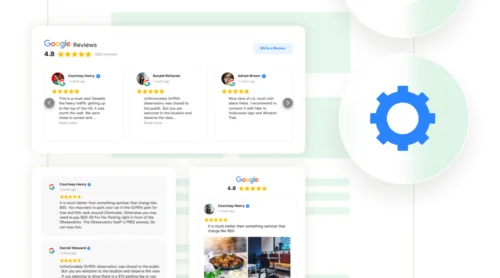
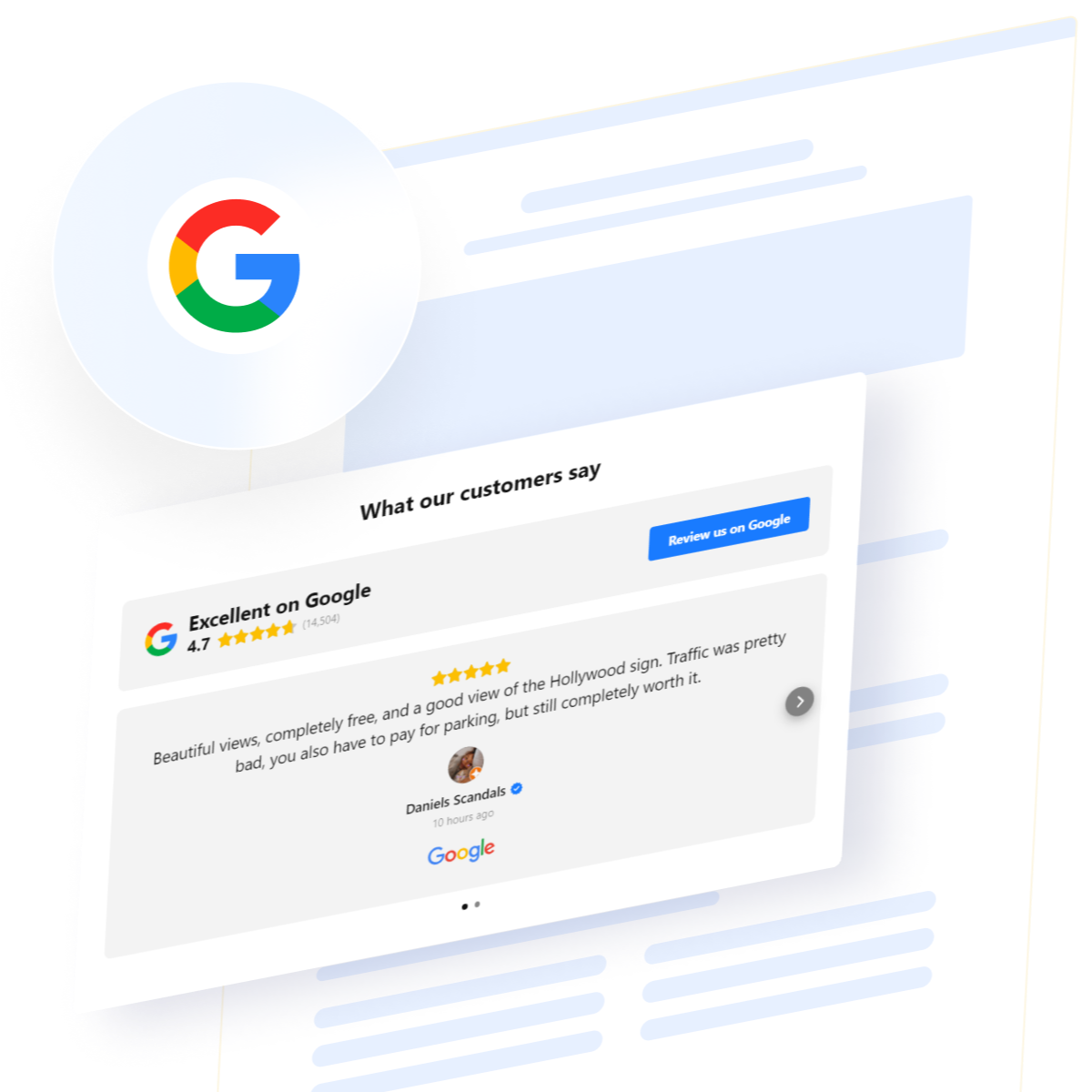
Elfsight’s Google Reviews widget connects to your Google Business Profile and displays your reviews on any website. You connect your business by entering your Google Place ID, business address, or business name — the widget automatically pulls your reviews and keeps them up to date as new reviews come in.
Build your own Google Reviews widget in the interactive editor ↓
Features relevant to review management:
- Filter by star rating and keywords — control which reviews appear publicly on your site, complementing the dashboard filters covered above
- Pin reviews to the top — highlight specific reviews that best represent your business
- Six layout options (Carousel, Grid, Masonry, List, Slider, Badges) — match the display to different page contexts
- Schema.org markup — can surface your star rating as a rich snippet in Google search results
- “Write a Review” button — redirects visitors to your GBP to leave a new review, closing the loop between displaying and collecting social proof
The widget works on WordPress, Shopify, Squarespace, Wix, Webflow, and any platform that accepts an HTML embed code — making it the most accessible way to add Google reviews to a website.
Frequently Asked Questions
How do I see all my Google business reviews in one place?
Can I export my Google reviews to a spreadsheet?
How long does it take for a Google review to appear?
Does Google notify me when a review is edited or deleted?
Can I filter Google reviews by keyword?
What's the best way to add Google reviews to my website?
Where to Start
The GBP reviews dashboard is a useful tool — but it’s a partial view. Reviews change without warning, disappear without explanation, and the star rating takes up to two weeks to reflect changes. Knowing where those blind spots are is the first step toward managing your reviews effectively rather than reactively.
A practical starting point: open your GBP dashboard and filter for unreplied reviews, starting with the lowest-rated ones. These are the reviews most likely to influence future customers—and responding thoughtfully is one of the highest-impact actions you can take. Then enable email notifications so new reviews don’t go unnoticed. If you want your reviews to influence decisions beyond Google, embed them on your website where visitors are already evaluating your business.