
Getting found is half of running a business online, and where people look is shifting. More buyers now open ChatGPT, Perplexity, or Claude to ask for product recommendations. If your business isn’t named in that answer, you never reach that audience, no matter how well your site ranks in traditional results.
Elfsight has always been about helping businesses get seen and achieve real results from their websites, so AI visibility fits naturally into that goal. This guide walks through tools for monitoring your AI presence, grouped by what each one actually does, and read through a small-to-medium-business budget lens.
- AI visibility tools show whether assistants mention and recommend your business
- Coverage is the main differentiator, from ChatGPT-exclusive to 11+ engines
- Continuous tracking starts around $20/mo, while one-time checks are free
- Evidence that these tools lift revenue is still limited, so weigh ROI claims carefully
Best tools for AI search visibility
What do AI visibility tools do? An AI visibility tool tracks how AI systems answer questions about your market, then reports whether your brand appears, how often, and in what light. Instead of checking keyword rankings, you check whether LLMs name you when someone asks for a recommendation.
Compared at a glance
There are many AI visibility tools on the market, differing in model coverage, depth, and price. Below, we’ve compiled a list of budget-friendly options fit for small and medium-sized teams with various tracking goals.
| Tool | Category | AI engines tracked | Entry price (annual billing) | Best for |
|---|---|---|---|---|
| HubSpot AI Search Grader | Free diagnostic | ChatGPT, Perplexity, Gemini | Free (one-time) | Anyone wanting a free baseline |
| Beamtrace | Budget-friendly | ChatGPT (more coming soon) | $20/mo | SMBs wanting tracking plus fixes |
| Otterly.AI | Budget-friendly | ChatGPT, AI Overviews, Perplexity, Copilot (Gemini/AI Mode extra) | $25/mo | Solo operators, budget-conscious SMBs |
| AIclicks | Budget-friendly | ChatGPT, Perplexity, Gemini, Claude, Grok, Copilot, AIO (choice of 3) | $49/mo | Small teams, multi-brand management |
| ZipTie | Mid-range | ChatGPT, Perplexity, AI Overviews | ~$60/mo | Small teams, citation-level mention tracking |
| LLMrefs | Mid-range | 11+ engines (ChatGPT, Perplexity, Claude, Gemini, Grok, Copilot, DeepSeek, and more) | $79/mo flat | Teams looking for broad engine coverage |
| LightSite | Technical GEO platform | ChatGPT, Claude, Gemini, Perplexity, Google AI Overviews | $129/mo | Teams wanting monitoring plus technical implementation |
| Peec AI | Tracker for teams | ChatGPT, Perplexity, Gemini (pick 3; more via add-ons) | $70/mo | In-house marketing teams, small agencies |
| Semrush AI Visibility Toolkit | SEO suite add-on | ChatGPT, AI Overviews, AI Mode, Gemini, Perplexity | $99/mo add-on | Teams already using Semrush |
Best AI visibility tools: budget-conscious options
These sit under about $35 a month and show which AI engines mention you, how often, and how you compare to competitors, with predictable pricing that suits solo operators and small teams.
Beamtrace
We’ve spent 14 years building user-friendly website tools used by more than 3 million businesses, and with Beamtrace, we apply that experience to AI visibility for owners who want answers without complicated technical setup.
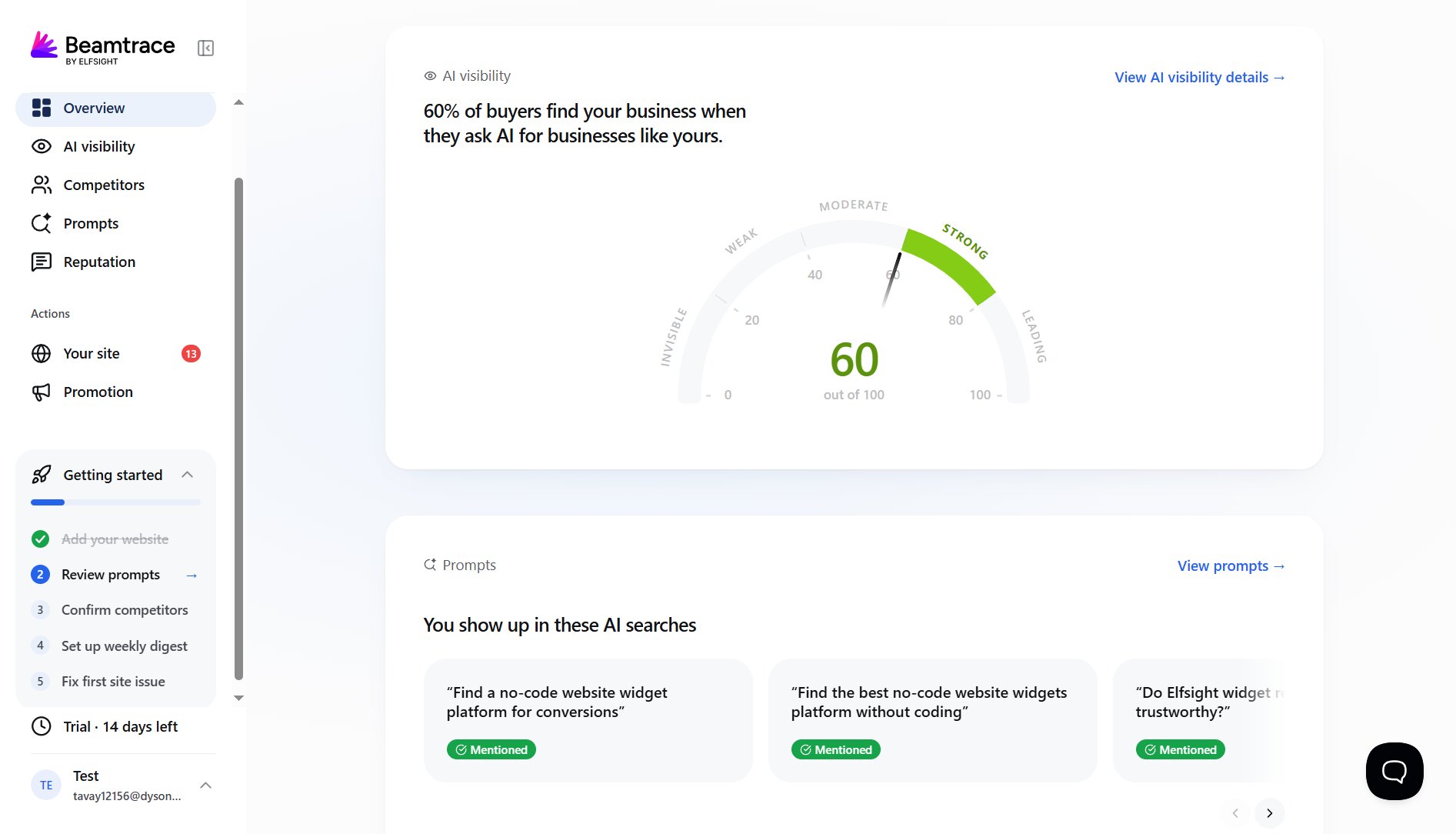
At $20/mo, it brings the core monitoring metrics together and includes an AI-powered summary on each performance card that explains what your results mean.
What you get with this tool:
- AI visibility score (0 to 100), mention frequency, and average position
- Prompt-level analysis and topic grouping to organize queries by theme
- Reputation insights across AI answers and public feedback
- Share of voice with competitor benchmarking and trend analysis
- An Actions section with improvement suggestions and professional assistance
Otterly.AI
Otterly.AI is another budget-friendly dedicated tracker on the market, suitable for solopreneurs and small teams. Every plan covers ChatGPT, Google AI Overviews, Perplexity, and MS Copilot, while Gemini and Google AI Mode are paid add-ons.
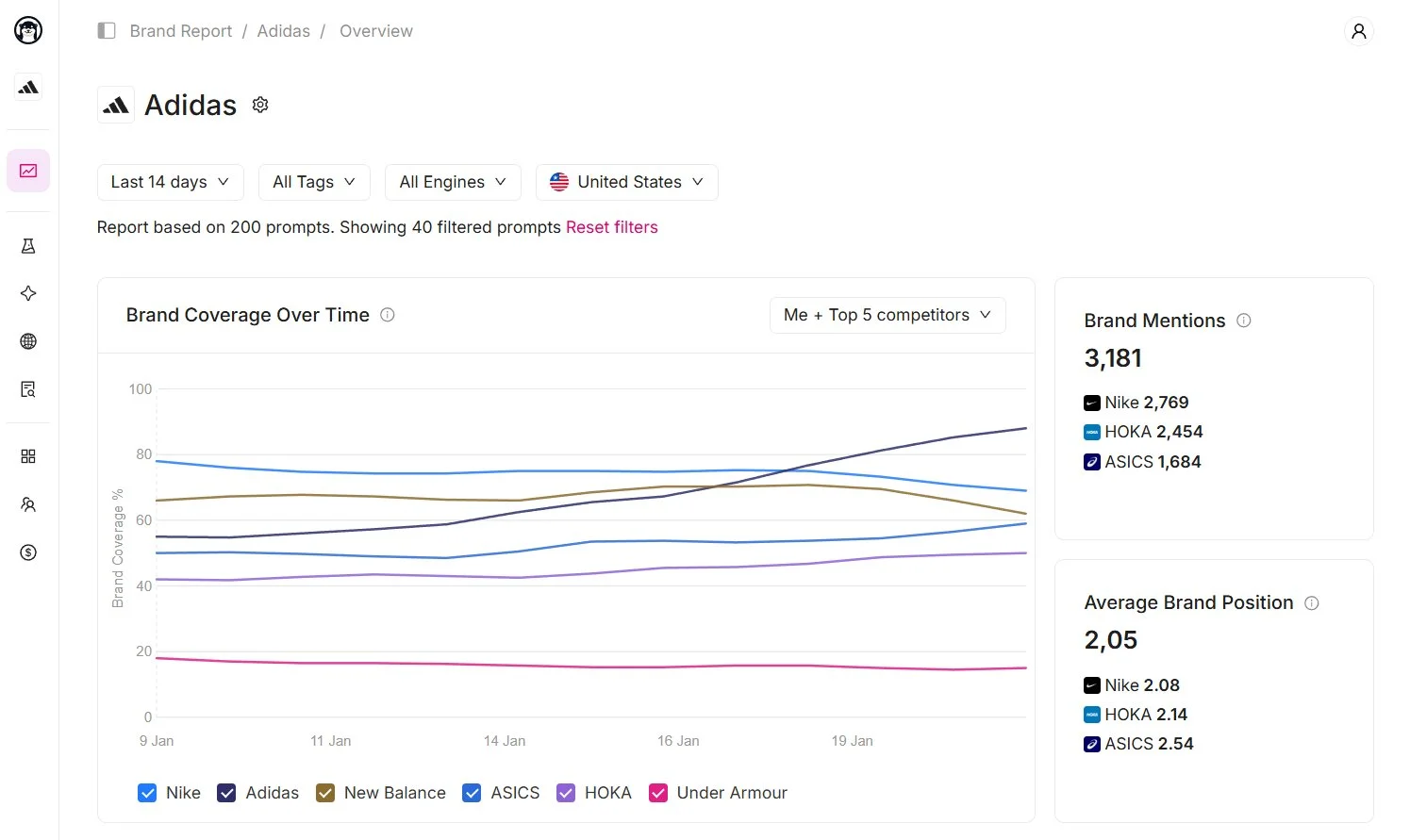
On the entry-level Lite plan at $25/mo, you get:
- Brand Visibility Index, Domain Ranking, and Share of AI Voice
- Net Sentiment Score and competitor comparison
- GEO URL audits for crawlability and on-page factors
- Daily tracking with 15 search prompts
- Unlimited team members and brand reports
Otterly suits budget-conscious SMBs and solo marketers, and agencies that value unlimited seats, client workspaces, and white-label reporting. It’s a weaker fit if you want built-in content optimization.
AIclicks
For teams wanting actionable optimization alongside tracking, AIclicks is a strong pick at $49/mo. Its strengths include prompt-level tracking with source gap analysis and content recommendations tied to visibility gaps.
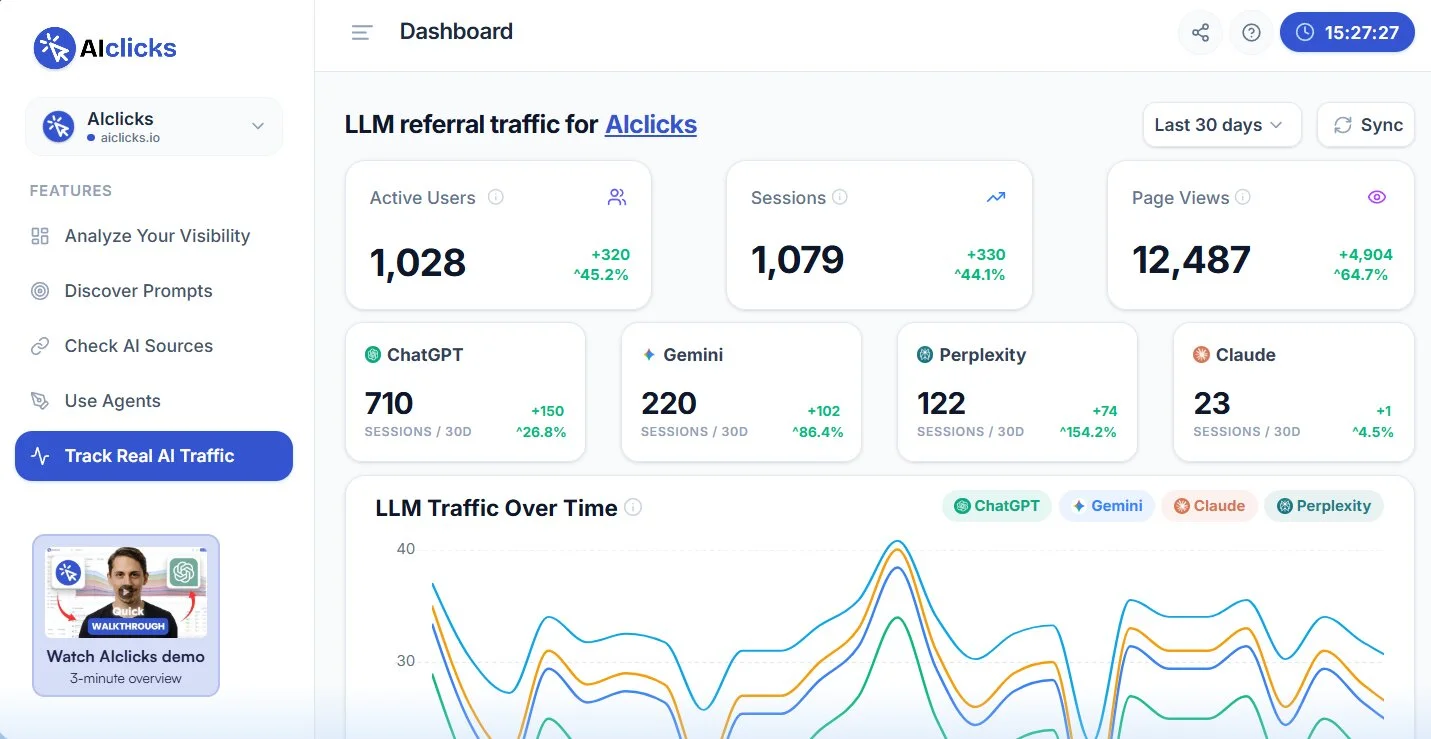
On the Starter tier, it offers:
- Brand mentions and visibility across 10+ AI platforms
- Up to 3 websites monitored, with unlimited seats
- 30 prompts tracked daily, split across your projects
- Competitor benchmarking, share of voice, and sentiment
- Source gap analysis and content recommendations tied to visibility gaps
AIclicks fits agencies wanting white-label reporting and reselling margin, and SMBs that want visibility and execution in one tool.
Mid-range AI search visibility tools
If you want room to scale, the middle ground between entry-level trackers and platforms built for large teams offers broader engine coverage, more prompts, and additional capabilities.
ZipTie
ZipTie pairs measurement with a built-in content optimization workflow, using real-browser scanning rather than API approximation. It tracks your brand across three major AI platforms – ChatGPT, Perplexity, and AI Overviews.
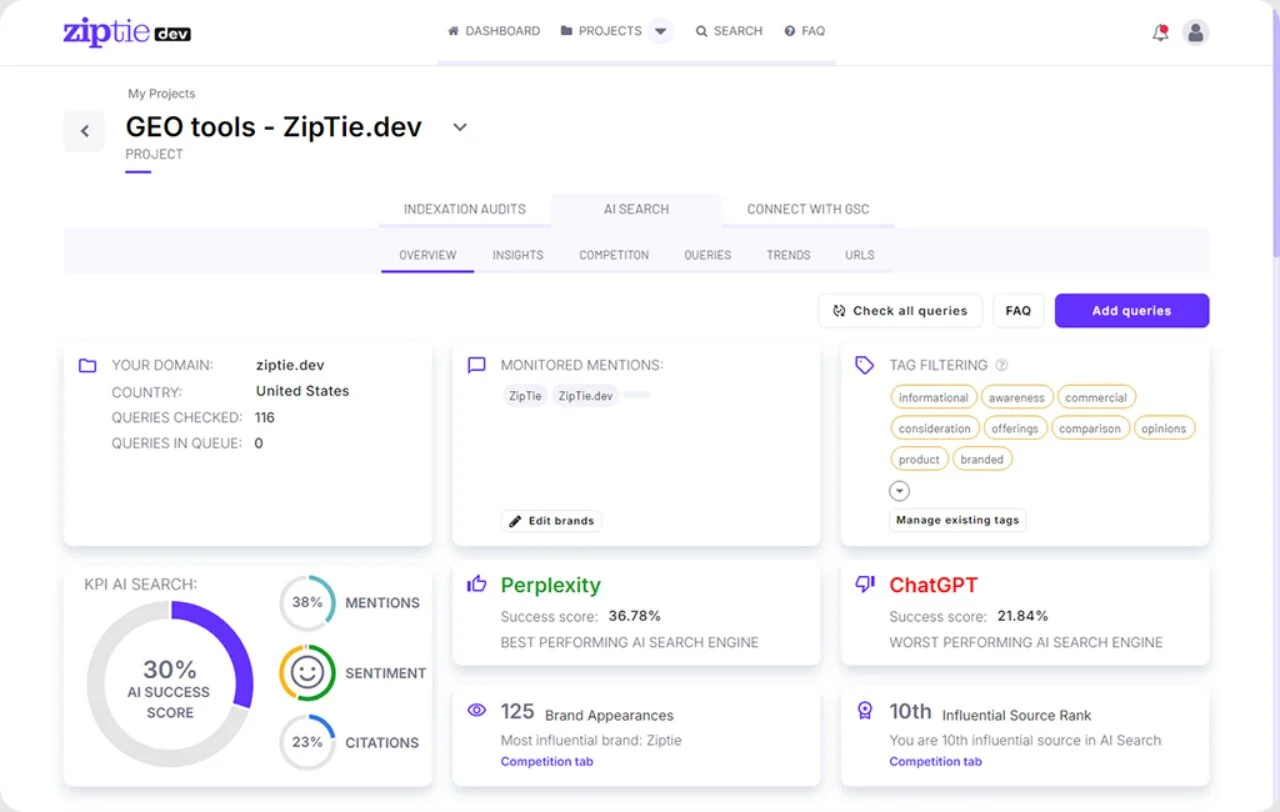
What you have access to at $60/mo:
- Brand mentions, citations, and Citation Share across relevant AI answers
- AI Success Score (mention frequency, citation presence, placement, and sentiment)
- Optimization recommendations to improve your citation chances
- Downloadable screenshot evidence of rendered AI answers
ZipTie works best for SEO and content teams focused on Google AI Overviews accuracy, and agencies that want screenshot evidence for client deliverables.
LLMrefs
LLMrefs is a keyword-first platform built to help SEO teams track keywords and topics rather than handwritten prompts. It expands each keyword into a fan-out prompt set, runs them across engines, and aggregates the results to assess statistical significance.
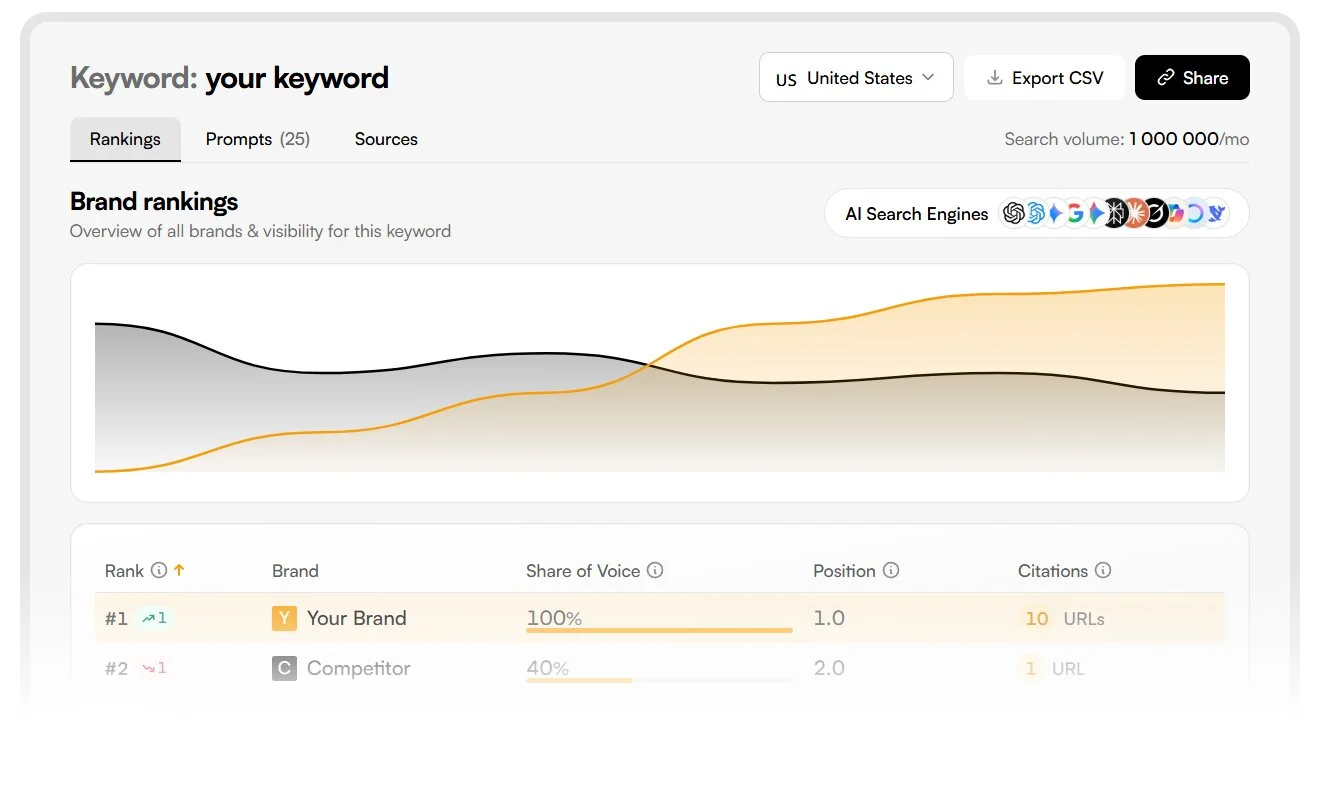
Its features include:
- Keyword-based visibility across 10+ engines
- Citations and source URLs, share of voice, and position
- A proprietary LLMrefs Score and competitor benchmarking
- Content-gap and model-bias analysis, with geo-targeting
LLMrefs suits budget SMBs, freelancers, and in-house SEO teams that think in keywords and want the cheapest broad-coverage entry.
LightSite
LightSite is an AI search platform combining monitoring with technical implementation. It tracks how ChatGPT, Claude, Gemini, Perplexity, and Google AI Overviews represent a brand, covering visibility, sentiment, citations, competitors, and query gaps.
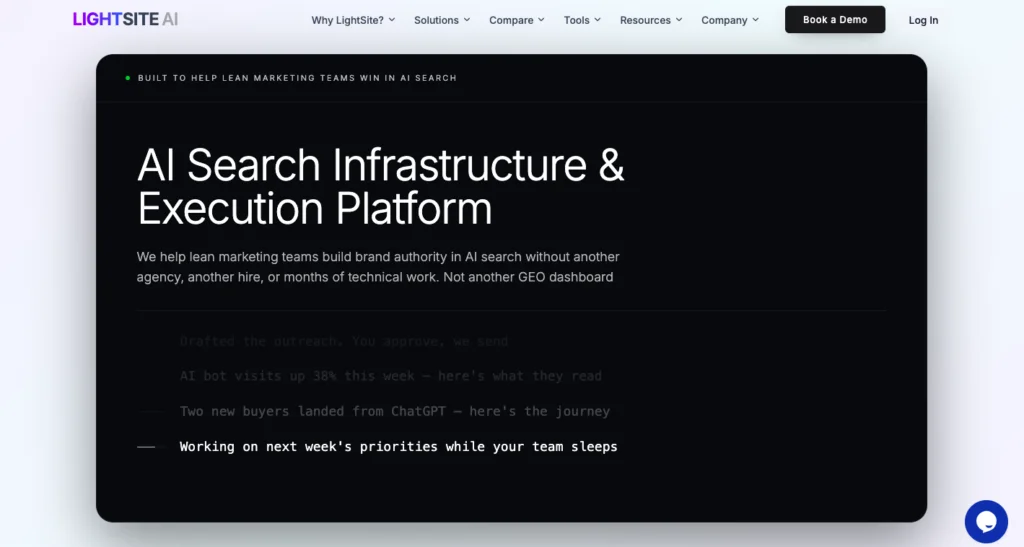
Its main differentiator is a machine-readable layer deployed alongside a website, including JSON-LD, an AI sitemap, structured endpoints, and an AI Skills manifest. Visibility, crawler, and content-gap data inform technical and content actions, with human approval before material changes are published. Plans start at $129 per month.
Key features:
- Multi-engine visibility, sentiment, and citation tracking
- Competitor and query-gap analysis
- AI crawler and referral-traffic analytics
- Machine-readable website infrastructure
- Human-approved technical and content workflows
Best fit: Marketing and SEO teams that want monitoring and technical implementation in one platform.
Peec AI
Peec AI tracks your brand across 6 engines on most plans, with additional engines available via per-model add-ons or an Enterprise plan. The Starter tier, at $70/mo, lets you track 50 prompts across three AI models of your choice.
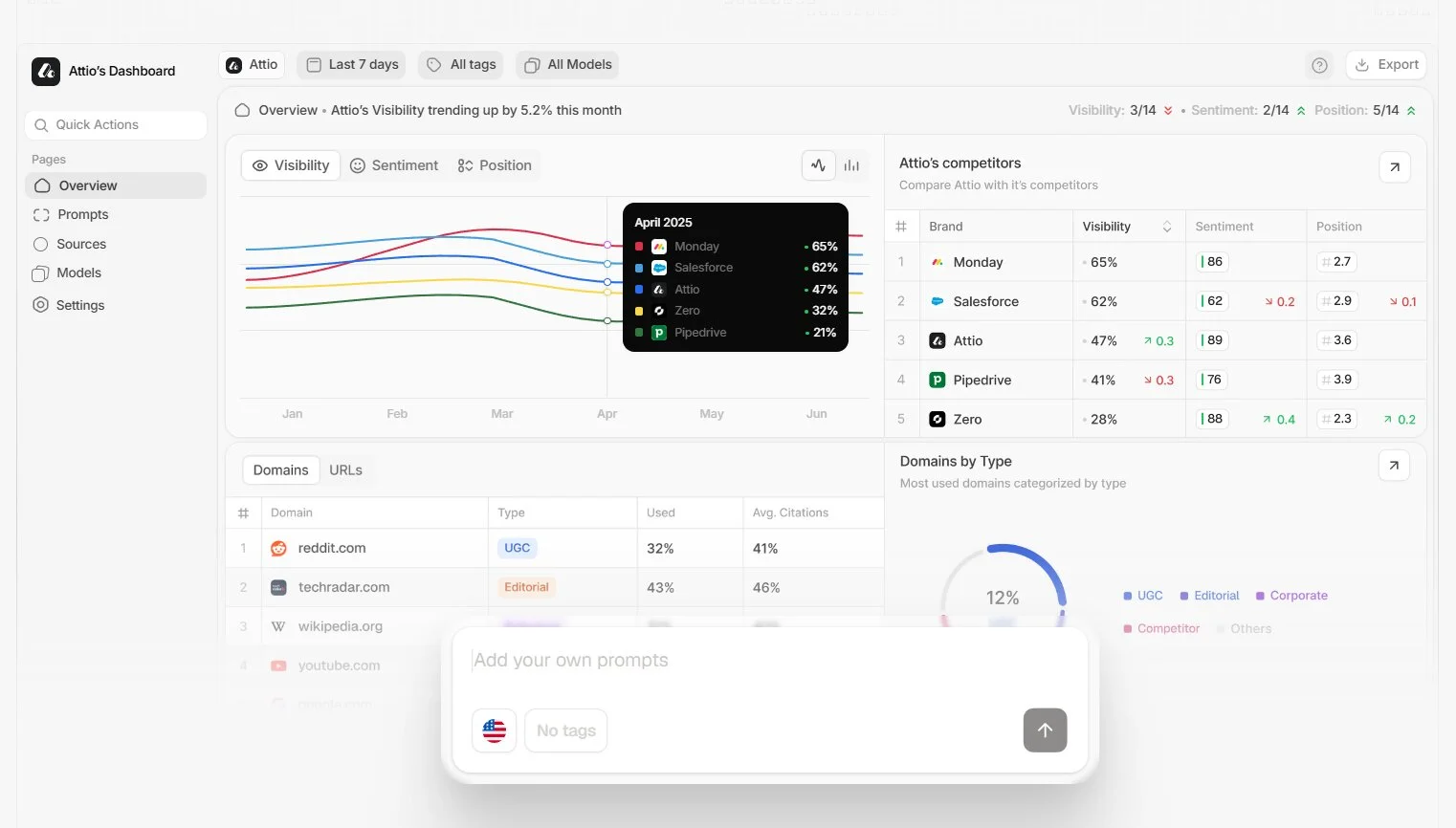
What it tracks:
- Brand visibility, placement in answers, and share of voice
- Strong sentiment scoring that measures how you’re talked about
- Competitor benchmarking and citation source analysis
- Actionable GEO strategy recommendations
Peec fits mid-market in-house teams and agencies that want clean daily tracking without full enterprise pricing.
SEO suites with AI visibility built in
If you already run your SEO within a major suite, adding AI visibility there keeps everything in a single dashboard. These are add-ons layered onto established platforms, so they make the most sense when you already pay for the base tool.
Semrush AI Visibility Toolkit
Semrush’s toolkit tracks your brand across ChatGPT, Google AI Overviews, AI Mode, Gemini, and Perplexity, including prompt research, competitor research, and an AI site audit, all backed by a large prompt database that refreshes daily.
It costs $99/mo per domain as an add-on, with extra prompts, domains, and users billed on top. The value is strongest when you already use Semrush for traditional SEO, since stacking add-ons would otherwise add up.
Ahrefs Brand Radar
Ahrefs Brand Radar covers six AI surfaces: Google AI Overviews and AI Mode, ChatGPT, Perplexity, Gemini, and Copilot, though not Claude or Grok. It draws on a large database of search-backed prompts and adds mention tracking across YouTube, Reddit, and TikTok, as well as historical data.
It requires an Ahrefs base plan plus per-platform AI index fees, so a realistic all-in cost lands around $828 to $1,148 per month.
Best free AI visibility tools: free tiers and snapshots
No continuous AI visibility tracker is completely free, but you can still start at no cost. Most paid tools offer a free trial with no card required, and a one-time snapshot check lets you see where your brand currently stands before committing to a subscription.
| AI visibility tool | Free trial | Paid subscription |
|---|---|---|
| HubSpot AI Search Grader | Free one-time check | $50/mo |
| Beamtrace | 14 days | $20/mo |
| ZipTie | 14 days | $60/mo |
| Otterly.AI | 7 days | $25/mo |
| LLMrefs | 7 days | $79/mo |
| Peec AI | 7 days | $70/mo |
| AIclicks | 3 days | $49/mo |
A free trial gives you the full paid feature set for a fixed window, long enough to run real prompts, see your competitors, and judge whether the data is useful before you pay. The one-time snapshot from HubSpot’s grader works differently: it shows your current standing in a single check and doesn’t track how it changes over time.
How to choose based on your budget
There isn’t a single best tool for AI visibility, and no ranking of the best-priced AI visibility tools out there fits every business, since the right choice depends on which engines you need and how much you plan to act on the data. A simple sequence keeps the decision manageable:
- Start with a free check to see where your brand stands in AI answers.
- Decide which AI engines actually matter for your buyers.
- Set a monthly budget band before comparing features.
- Choose monitoring-only or monitoring-plus-action.
Keep expectations grounded in results. Independent, verified evidence that AI visibility tools directly lift traffic or revenue is still limited. Treat these tools as a measurement and a guide for a fast-moving channel, and judge them by whether the insight helps you make better content decisions rather than by a promised revenue multiple.
Frequently asked questions
Can't I just ask ChatGPT myself whether it recommends my brand?
You can, and it’s a useful spot check. The limitation is consistency: AI answers vary between sessions, users, and phrasings, so a single manual check won’t tell you how often you appear or how you compare over time. AI visibility tools run many prompts on a schedule and average the results, which turns a one-off impression into a metric you can track.
Do AI visibility tools track Google and other search engines too?
Most focus on AI-generated answers rather than classic blue-link rankings, but the line is blurring. Several of the best AI visibility tools for search engines track Google’s AI Overviews and AI Mode, which appear directly in Google results. The best tool for AI search visibility in your case depends on whether you also want traditional keyword rankings; if you do, an SEO-suite option like Semrush or Ahrefs keeps both in one place.
What's the best free AI visibility tool, and is free enough?
HubSpot’s AI Search Grader is the strongest free option, but free here means a one-time snapshot rather than ongoing monitoring. If you only need to know where you stand today, it’s enough. If you’re actively improving your content and want to see whether changes move the needle, you’ll need a paid tracker that checks on a schedule, or at least a free trial of one.
Do these tools track visibility across different LLMs?
Coverage varies widely, and it’s the main thing to check before buying. The best AI visibility tools for LLM tracking, such as LLMrefs, cover 10 or more engines including ChatGPT, Gemini, Claude, and Perplexity, while AIclicks and Peec AI let you pick three models to follow. Others, including several entry tiers, track ChatGPT only, so confirm the supported engines on the plan you’re considering.
Are AI visibility tools actually worth it?
For most businesses, the value right now is measurement: knowing whether AI assistants mention you and how that changes as you update your content. What isn’t yet proven by independent research is a reliable link between AI mentions and revenue, so approach bold ROI claims cautiously. If AI answers are influencing your buyers, tracking your presence is a reasonable early investment, provided you set realistic expectations.
Where to start
Start with a free check to see whether AI assistants mention your business, then match a paid tracker to your budget and to the engines your buyers actually use. If most of your audience lives in ChatGPT, a focused, affordable tracker will serve you well.
The technology across these tools is more similar than the marketing suggests, real coverage differs plan by plan, and independent proof of revenue impact is still thin. Being named when a buyer asks AI for a recommendation is the new version of showing up on page one, and the right tool is simply the one that helps you see that clearly and improve it within your means.
If you’re only starting out on your AI visibility journey, check out a step-by-step guide on How to Improve Brand Visibility in ChatGPT.